Our story
I kept waiting for somebody to rescue me.
This is the long version of why CareTeamBinder exists. It is one father’s account, and every word of it is mine. If you are near the start of this, some of it will sound familiar.
- The diagnosis
Nobody says the word
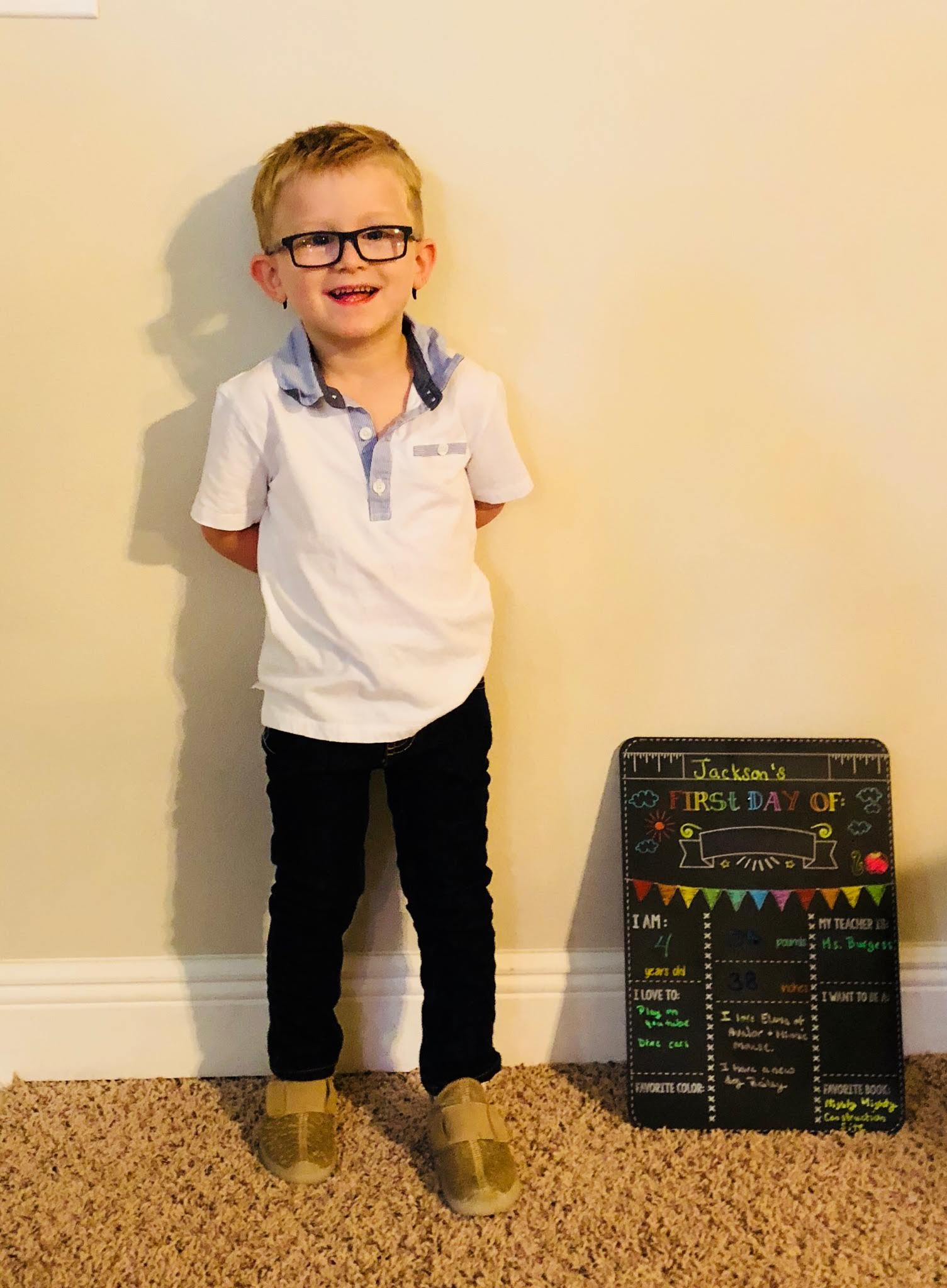
Jackson was about two. I was sitting in the lobby of a child development psychologist. She gently gave me the test results without ever saying he has autism.
I remember not arguing with her. I remember asking questions in disbelief.
It broke me as a dad.
- What they hand you
A couple of pamphlets
And if you're lucky, a website with dozens of faceless names. Respite care, therapy groups, speech and behavior. You work the list yourself, one call at a time.
Then you find somebody, and the real education starts. Authorizations. Pre-approvals. Hitting your out-of-pocket max every single year, because the therapy doesn't stop and it isn't cheap.
- Some people don't get back to you.
- Some do, and have no availability. Long waiting list.
- Some have availability and are not the right fit.
- Some are the right fit and are an hour away.
- The first year
The three-inch binder
We made him one. White, three rings, three inches thick. Tabs for speech, OT, PT, ABA and the school team.
Jackson carried it. It was heavy, and he would rip the pages out or color on them, or both. And then we never got to read the notes.
Every discipline wrote in its own format, with the information in its own places. Some tabs ran oldest first, some newest, and a provider had to hunt.
With five disciplines it fills up fast, and then it's impractical. So you throw notes away, or you scan them onto a computer and lose them a different way.
- The part nobody warns you about
None of them talk to each other
Not across companies, and not between private care and the school. Sometimes not even inside the same company: a specialist changes hands and the two of them never coordinate.
The private centers take on new graduates and rotate the team. Jackson can have three different providers in a year, in one discipline. Every one of them has to be caught up from the beginning.
When it isn't paper, it's four websites with four logins, and those are built for billing and appointments. Not for session notes.
- Every year since
Finding it again
Insurance wants a copy of his diagnosis every time the plan changes. The school wants last year's goals. Another provider wants the evaluation.
It's all in a cloud drive among thousands of files, and you only find it if you guess the keyword exactly right.
- In the meetings
Two sets of goals that were never meant to match
The school writes goals to get him through the curriculum. The private therapists write goals to hit milestones for his age. Those are different targets, and they are allowed to be. Nobody tells you that.
To line them up you need somebody from each team on the same call, and everyone is busy. That call takes a week to arrange.
I felt discombobulated. I kept waiting for somebody to rescue me from the chaos.
What I actually wanted
I wished I had one person who would carry the burden with me, not for me. Somebody who would tell me and my care team what we needed to know, when we needed to know it, and catch the things that did not line up, so we could make sure Jackson got the best care across every discipline at the time it mattered.
That is the whole product. I wrote that sentence years before I knew what to call it.
This is my permanent shareable memory. When insurance wants a pre-authorization answer, or a copy of his diagnosis, there is one place to go. When I need to know how many hours of speech the school committed to, it is in his profile. When his therapist changed again, I know who I am calling and who is meeting me at the door.
Why it is built for humans and not for a robot
The thing I want most is not clever software. It is his school speech therapist and his private speech therapist in the same place, looking at each other’s goals, saying: here is what we are working on, how does that line up with yours?
Then they coordinate without me arranging anything, and I follow along or I read what they landed on. My advocate can look at it and weigh in. It is like having a council at my fingertips, and they can talk whenever they have a free minute instead of waiting a week for a meeting.
That is better than having AI do it, because those are humans in the loop who know my specific child. The software’s job is to notice what does not line up and put it in front of the right people. The people are the point.
Why now
I thought there should be a program for this in 2019. I had the concept and no way to build it. I waited for the technology to get good enough and affordable enough to reach somebody like me.
Then I built it for Jackson and for us, and used it on my own family first. It worked well enough that I wanted other families to have it.
We are not the only people who noticed. Researchers at Boston Children’s Hospital and Duke built a tool called Caremap to study exactly this: families of children with complex needs, holding a care plan together across a dozen systems that do not talk to each other.
What I want for you
Six months in, I want the stress of coordinating across all those disciplines to have eased. I want your care team to feel like they are pulling toward one goal. I want you to feel informed, in the loop, and more in control than you were.
Your life, more organized around your child.